Commercial Modular Building Program
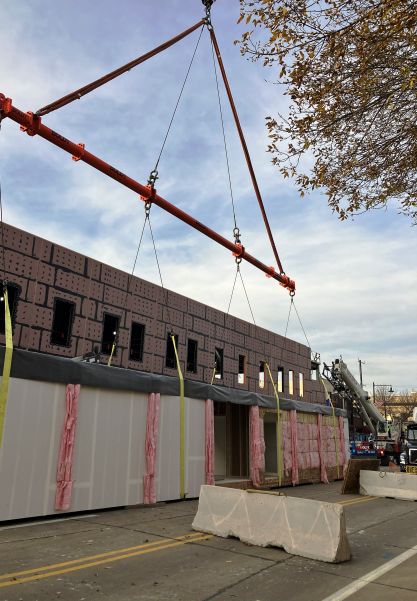
A New Path for Off-Site Construction
Wisconsin has established a regulatory framework for commercial modular buildings and building elements - providing manufacturers, design professionals, contractors, owners, and code officials with a defined pathway for the use of off-site construction in commercial building projects. Wisconsin's Commercial Modula Building Program recognizes the growing use of factory-built construction while maintaining requirements for building safety, plan review, inspection, and code compliance.
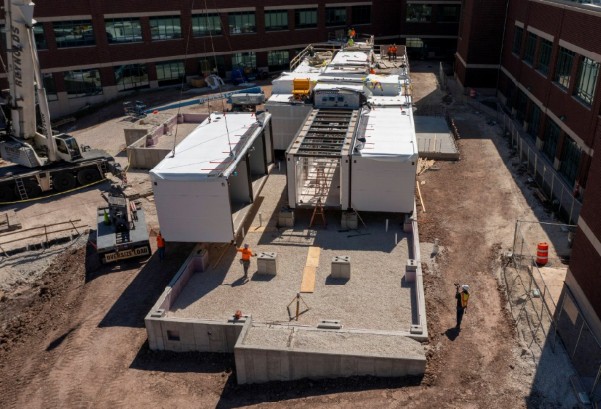
Commercial modular construction may include complete building modules or individual building elements that are substantially fabricated or assembled at a manufacturing facility before being transported to the project site. Wisconsin’s program establishes a process for reviewing the manufacturer, construction documents, quality-control procedures, inspection program, and continuing compliance so that approved factory construction can be incorporated into projects throughout the state.
Wisconsin Commercial Modular Requirements
The Commercial Modular Building program is administered by DSPS under Wisconsin’s Commercial Building Code, including the applicable provisions of Wis. Admin. Code ch. SPS 361 Subchapter V.
Manufacturers seeking to participate in the program must obtain approval from DSPS and maintain the documentation, quality-control procedures, inspection processes, certifications, and reporting required by the program.
The process begins with approval of the manufacturer—not with an individual building project.
Step 1: Commercial Modular Manufacturer Application
Manufacturers interested in providing commercial modular buildings or building elements for use in Wisconsin must first submit Form 2020-IS, Commercial Modular Building Manufacturer Application, to DSPS.
The manufacturer application establishes the company seeking recognition under Wisconsin’s Commercial Modular Building Program and allows DSPS to evaluate the manufacturer’s eligibility to participate in the program.
The 2020-IS manufacturer application must be reviewed and approved by DSPS before the manufacturer may proceed to the Preliminary Review process.
Step 2: Preliminary Review
After receiving approval of Form 2020-IS from DSPS, the manufacturer may submit for a Preliminary Review through DSPS's electronic plan review system, eSLA. See the eSLA Information page for user guides and general instructions.
The Preliminary Review provides an opportunity for DSPS to evaluate the approved manufacturer’s proposed modular program before proceeding through the full design approval process. The review helps establish the types of buildings or building elements proposed, applicable Wisconsin code requirements, design responsibilities, quality-control procedures, inspection arrangements, and the division between factory-completed and site-completed construction.
This step is especially important because commercial modular construction can range from individual wall, floor, or roof elements to substantially complete building modules. Establishing the scope early helps ensure that the manufacturer and DSPS have a common understanding of what will be covered by the modular approval and what will remain subject to project-specific plan review and inspection.
As a reminder, manufacturers should not submit the Preliminary Review while their 2020-IS application is pending. The manufacturer may only submit the required Preliminary Review through eSLA once DSPS has approved the 2020-IS application.
This sequencing ensures that the manufacturer has first been accepted into the program before DSPS begins reviewing the proposed modular building or building-element system.
Manufacturer Approval and Annual Recertification
Following the Preliminary Review, the manufacturer must provide the documentation necessary for DSPS to evaluate and approve the proposed modular designs and manufacturer’s modular program.
The manufacturer’s modular program must establish how approved construction will be produced, documented, and inspected at the manufacturing facility. This includes maintaining appropriate quality-control procedures and ensuring that modular buildings and building elements continue to be manufactured in accordance with the documents accepted by DSPS.
Manufacturer approval is an ongoing responsibility rather than a one-time product approval. Commercial modular manufacturers are subject to annual recertification. Changes to approved designs, manufacturing processes, materials, quality-control procedures, or inspection arrangements may require additional review or approval before those changes are incorporated into production.
Wisconsin Insignias and Monthly Reporting
Approved commercial modular buildings and building elements must be appropriately identified through Wisconsin’s modular insignia process.
The insignia provides inspectors, code officials, contractors, and owners with evidence that the factory-built construction was manufactured under Wisconsin’s Commercial Modular Building Program. Manufacturers are responsible for maintaining control and accountability of insignias issued to them, including documentation of insignias applied to buildings or elements and insignias that remain unused.
Manufacturers must also comply with DSPS’s monthly reporting requirements. Form SBD-6229, Monthly Modular Construction Compliance Certificate, is submitted by the 10th of each month and is used to report applicable modular buildings and building elements shipped and to maintain accountability for insignia numbers.
This reporting process allows DSPS to connect approved manufacturers, factory production, insignias, and modular buildings or elements entering Wisconsin.
Modular Approval Does Not Replace Project Plan Review
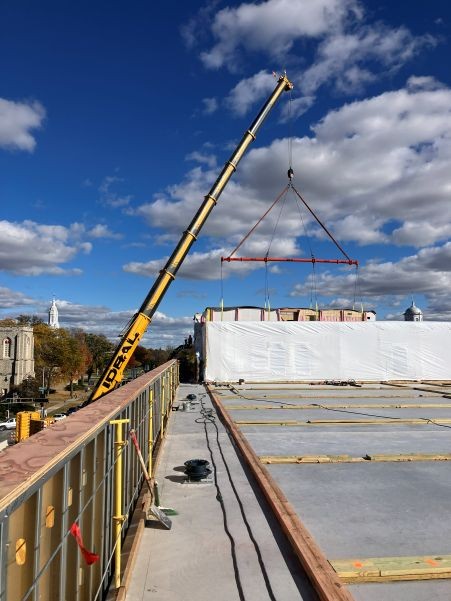
One of the most important points for stakeholders to understand is that approval of a commercial modular building or building element does not constitute approval of the entire site-specific building project.
The modular approval addresses the construction performed within the approved manufacturing process. The final building project remains subject to applicable Wisconsin requirements for commercial building plan review, permits, site installation, and inspection.
Design professionals should clearly identify which portions of the project are covered by the approved modular construction and which portions are part of the site-specific design.
This coordination is particularly important for foundations, structural connections, means of egress, accessibility, fire-resistance-rated construction, fire suppression and alarm systems, HVAC, plumbing, electrical systems, energy-code compliance, utility connections, and site-installed exterior assemblies.
Project plans must provide sufficient information for the reviewing authority to understand how the approved modular building or element interfaces with the remainder of the building.
Plumbing and Electrical Requirements
Commercial modular approval does not eliminate Wisconsin requirements applicable to plumbing and electrical systems incorporated into modular construction.
Plumbing systems and products must comply with the applicable requirements of Wis. Admin. Code ch. SPS 384, including required Wisconsin plumbing approvals, when applicable.
Electrical installations must comply with Wis. Admin. Code ch. SPS 316 and applicable Wisconsin electrical requirements. Electrical work must also be performed and inspected in accordance with Wisconsin credentialing, permitting, and inspection requirements, as applicable.
Manufacturers should identify plumbing and electrical systems early in the approval process so that responsibilities for factory-installed and site-installed systems are clearly established before production begins.
Factory and Site Inspection Responsibilities
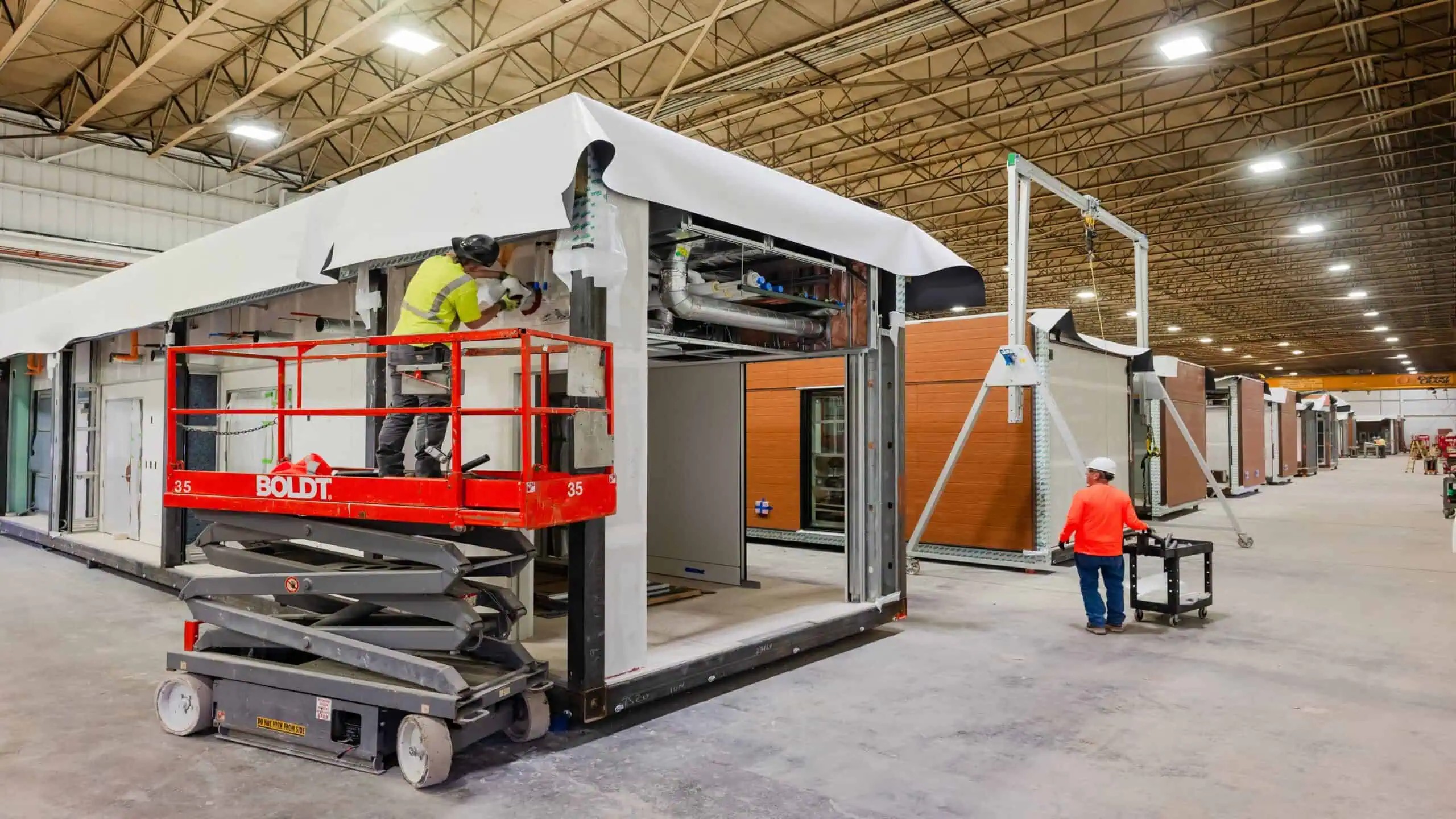
The manufacturer’s modular program addresses one of the unique challenges of off-site construction: many components may be concealed before the building or element ever reaches the Wisconsin project site.
Factory inspection is therefore an important part of verifying construction that cannot reasonably be inspected after the modular building or element leaves the manufacturing facility. Manufacturers must maintain the approved inspection and quality-control processes associated with their Wisconsin approval.
Once the modular building or element reaches the project site, the appropriate Wisconsin-credentialed inspectors remain responsible for applicable site work and systems within their jurisdiction.
Site inspections may include foundations, structural connections, utility connections, site-installed mechanical systems, plumbing and electrical connections, fire-protection systems, accessibility features, and other construction that is outside the scope of the approved factory-built portion.
For projects within a delegated municipality, applicable reviews and inspections may be performed through the delegated authority. Projects under state jurisdiction remain subject to applicable DSPS review and inspection requirements.
Understanding the Approval Sequence
Manufacturers, design professionals, contractors, and owners should identify commercial modular construction at the beginning of a project—not after modules have already been manufactured or delivered to Wisconsin.
Generally, the steps are:
Submit Form 2020-IS
DSPS Reviews and Approves 2020-IS
Manufacturer Submits Preliminary Review through eSLA
Preliminary Review and Modular Design/Program Approval
Required System and Design Approvals
Manufacturing and Factory Inspection
Wisconsin Insignia
Monthly SBD-6229 Reporting
Project-Specific Plan Review
Site Installation and Inspection
The distinction between submitting the 2020-IS and receiving DSPS approval of the 2020-IS is important. A manufacturer becomes eligible to move to the Preliminary Review stage only after the 2020-IS has been approved by DSPS.
Following this sequence helps establish responsibilities early and reduces uncertainty when modular buildings or building elements are incorporated into individual projects.
Design professionals also play an important role by clearly identifying the boundary between modular-approved construction and project-specific construction on the plans. This becomes especially important when factory-built assemblies conceal structural, mechanical, electrical, plumbing, fire-protection, or other components that would normally be inspected during conventional field construction.
Supporting Innovation While Maintaining Safety
Off-site construction continues to grow as owners, developers, contractors, and manufacturers seek opportunities to improve construction schedules, quality control, workforce utilization, and project predictability. Factory construction can allow portions of a building to be manufactured concurrently with site development and foundation construction, potentially shortening overall project schedules.
Wisconsin’s Commercial Modular Building Program provides a regulatory pathway for these evolving construction methods while preserving DSPS’s responsibility to ensure commercial buildings comply with applicable health, safety, and building-code requirements.
For manufacturers interested in bringing commercial modular buildings or building elements into Wisconsin, the process begins with becoming an approved Wisconsin commercial modular manufacturer.
Apply > Obtain manufacturer approval > Complete the Preliminary Review > Begin manufacturing after design approval
DSPS looks forward to working with manufacturers, design professionals, contractors, delegated agents, inspectors, owners, and other stakeholders as commercial modular construction continues to expand throughout Wisconsin.