
Door Clearances for Residential Type Elevators In Commercial Buildings and Residences
The following describes a potentially life-threatening hazard that may be present in elevators in the state of Wisconsin. Affected elevators could have a rated load of 450 lbs to 1200 lbs and would have been installed as follows:
In a Commercial building
Almost exclusively in places of worship.
Original elevator installation contract date between September 1, 1988 and July 1, 2002.
Installed in such buildings where structural or other issues made installation of a larger commercial type of elevator impractical or impossible.
In a Commercial building
Allowed by petition for variance.
Original installation contract dates between 1988 and June 2020.
Installed in such buildings where structural or other issues made installation of a larger commercial type of elevator impractical or impossible.
In a Residence
Original elevator installation contract date prior to January 1, 2009.
Installation of these elevators was not regulated at the time therefore the state of Wisconsin Department of Safety and Professional Services (DSPS) does not have records of these installations.
In a Residence
Original elevator installation contract date on or after January 1, 2009.
Installation of these elevators has been regulated by DSPS however these elevators are not subject to periodic inspections therefore measures that were required by code to mitigate the hazard described here may have been removed after the elevator passed inspection therefore the hazard may exist.
Note: This condition is not present in typical passenger elevators of the type that operate in most commercial buildings. Those elevators typically have horizontally sliding powered doors and do not have the hazard described here.
Deaths Have Occurred
Links to reports of deaths associated with this condition regarding residential-type elevators, particularly those having excessive clearance between hoistway (landing) doors and elevator car door:
https://www.cbsnews.com/news/product-recall-residential-elevators-childs-death/
https://www.npr.org/2022/01/11/1072083465/recall-in-home-elevators
Identifying the Hazard
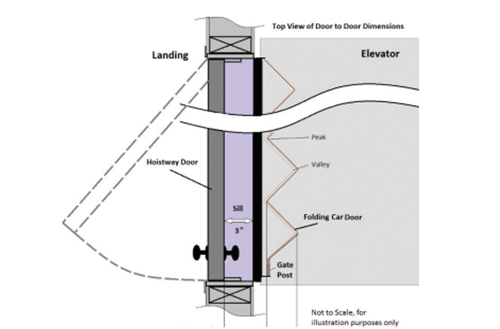
An elevator may have excessive clearance between a hoistway (landing) door and the elevator car door. The space may be large enough for a child to occupy the space in both the landing and car doorways at the same time. The elevator system will not detect the presence of a child in this space. If both the landing and elevator doors are closed, the elevator will move away from that landing if called or sent to another landing.
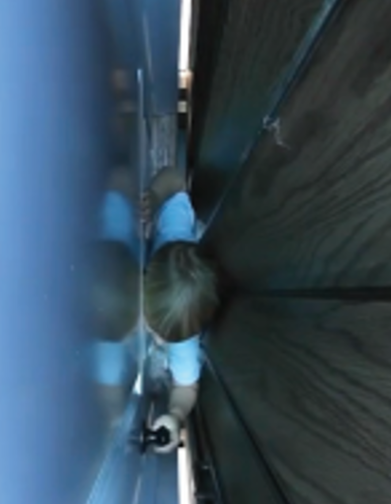
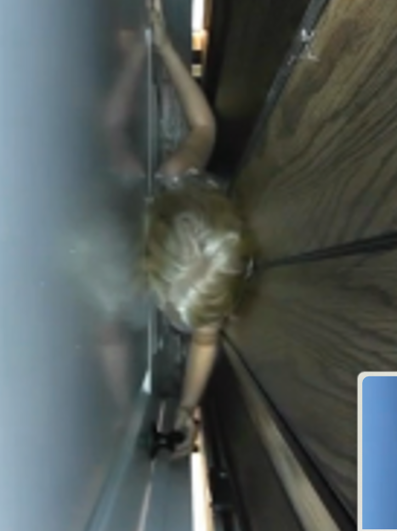
If a child occupies the space between the doors and the elevator is called to a floor below, the child will be caught between the top of the elevator doorway and the landing floor sill.
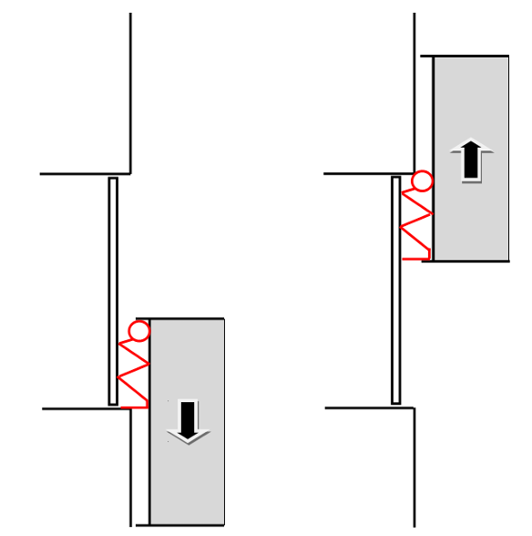
If the elevator is called to the floor above, the child will be caught between the floor of the rising elevator car and the hoistway door header of the landing.
Elevators that can lift several hundred pounds will impart that force upon any obstruction such as a child in this space.
Prevention
The current safety code for new elevators addresses this hazard by requiring new hoistway (landing) doors to be located much closer to the edge of the landing. Instead of a 3” wide sill behind the landing door where a child could stand, current code allows just ¾” – not enough for a foothold. And where earlier codes allowed the total space between the landing doors and the elevator car door to be 5” or more (easily large enough for a child as shown in the photos), current code requires the space to be small enough that a 4” diameter ball could not fit between a closed landing door and the elevator car door.
This newer code applies In Wisconsin however it is not retroactive. This code only applies to newly installed residential type elevators where the installer and the owner signed the installation contract on or after June 1, 2020.
Identifying the Hazard for Existing Elevators
All existing elevators of this type in commercial buildings or residences, regardless of the installation contract date should be checked for this hazard. If an owner is unsure of how to measure the space between the doors, a licensed elevator contractor should be consulted. Under no circumstances should someone try to enter this space and close the doors to take measurements.
Correction for Existing Elevators
Ideally, this hazard would be eliminated by moving the landing doors closer to the elevator. This would be a permanent solution and very difficult for someone to reverse in the future.
A lower-cost solution is the installation of a space guard on the elevator-side of the landing door. A space guard can effectively occupy the space between the landing door and elevator door that a child might otherwise occupy.
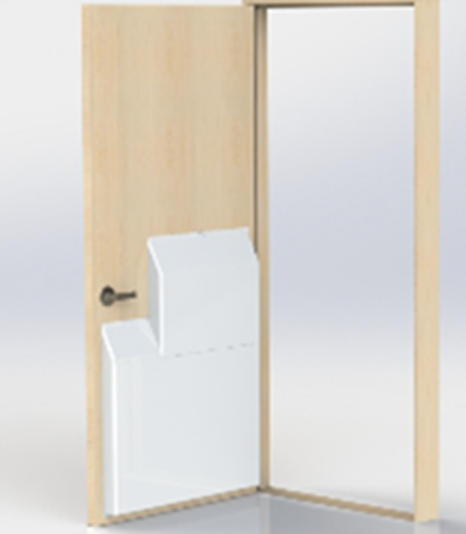
Space guards may be made of plastic, clear acrylic, wood, or other suitable material. The top of the space guard should be beveled at 75 degrees to the horizontal to prevent a child from standing on the top edge or a horizontal surface.
Many elevators were required to have space guards by code when installed however it is possible that space guards have been removed. Where a space guard was required, it may not be removed.