
Firefighter Exposure Protection
DSPS's standard on Fire Department Safety and Health identifies areas where fire departments must ensure that firefighters are limiting their risks and exposures to hazards or potential hazards that can be dangerous to their life and health. Many of the standards noted in SPS 330 are based upon best practices from NFPA 1500 or are directly referenced from OSHA standards.
Firefighter Exposures | ||
Type | Risks | Protections |
Inhalation | On-Scene (without SCBA)
| On-Scene (without SCBA)
|
Rehab
| Rehab
| |
Ingestion | On-Scene, Rehab, and Transit
| On-Scene, Rehab, and Transit
|
Absorption | On-Scene, Rehab, and Transit
| On-Scene, Rehab, and Transit
|
SPS 330 Requirements:
Fire Departments must provide and enforce the use of personal protective equipment to firefighters.
Fire Departments must ensure that personal protective equipment is inspected and maintained.
Fire Departments must provide information and training to firefighters on how to properly use, maintain, and decontaminate their personal protective equipment. Firefighters must also have training of the limitations of their personal protective equipment.
SPS 330 Requirements:
Prior to initial fit test, firefighters must complete a medical evaluation.
Firefighters must be fit tested annually.
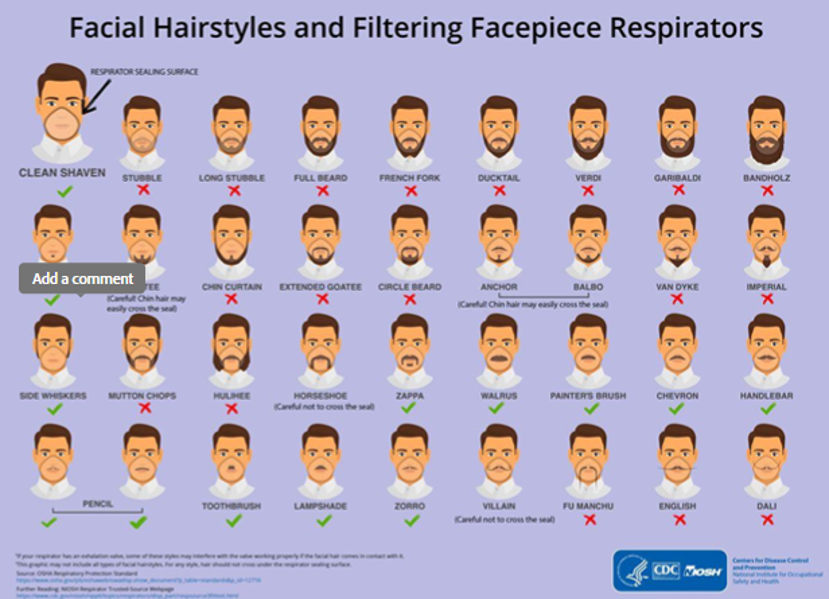
Firefighters cannot have facial hair or any condition that interferes with the seal of their facemask if expected to wear an SCBA. If a firefighter wears glasses, they must be worn in a manner that does not interfere with the mask seal.
Additional Resources:
SPS 330
Medical Evaluation Form Template
National Firefighter Cancer Registry
NIOSH Firefighter Cancer Study
Contamination Control Study
PFAS Study
For Additional questions regarding SPS 330 requirements, use the Inspector Look-Up Tool to find the DSPS Fire Coordinator for your county.